


[Long-lasting] Laser Hair RemovalEnhance Makeup Adherence! Vellus Hair Laser Removal

Enhance Makeup Adherence! Vellus Hair Laser Removal
Fine vellus hair on the face can make the skin appear dull or cause makeup to not adhere evenly. Tidying up vellus hair can make the skin surface smoother, reduce sebum and waste products getting tangled in the fine hairs, which can help manage skin troubles. You can also expect a more natural and close-fitting makeup application. To reduce the burden of skin damage or folliculitis that can occur during self-shaving, laser hair removal uses a wavelength suitable for fine vellus hair to deliver energy to the hair roots. During the procedure, an instantaneous cooling system is used to reduce the burden of pain. With multiple consistent treatments, there is a possibility of achieving clearer and softer skin texture, and if you desire a natural and well-groomed skin condition, it is advisable to consult with medical staff before proceeding. *Female doctors available every day *The price for one session of any hair removal treatment is 39.2% of the 5-session package price. *VAT separate
Options
Treatment Details


Features of Dewy Fine Hair Removal
1. Beyond fine hair removal, it can help improve skin texture.
The fine hairs on your face are usually thin and light in color, making them less noticeable.
However, sometimes they can cause makeup to not adhere well to the skin or make your overall facial skin tone appear dull.
This fine hair removal procedure
goes beyond simply removing hair, aiming for a skin condition that helps with smooth makeup adherence.
2. You can directly observe the changes in hair after laser energy is delivered.
When laser energy reaches the fine hairs,
thermal denaturation occurs in the hair, and you can feel your skin texture becoming smoother immediately after the procedure.
You can expect an improvement in makeup adherence with just a single session.
After approximately 5 repeated sessions, the growth rate of fine hairs may noticeably slow down, or the extent of hair growth may remain reduced.
Through these changes, you can expect a skin condition where makeup blends better and lasts longer.
3. Customized settings that consider the characteristics of facial skin reduce the risk of hyperpigmentation or folliculitis.
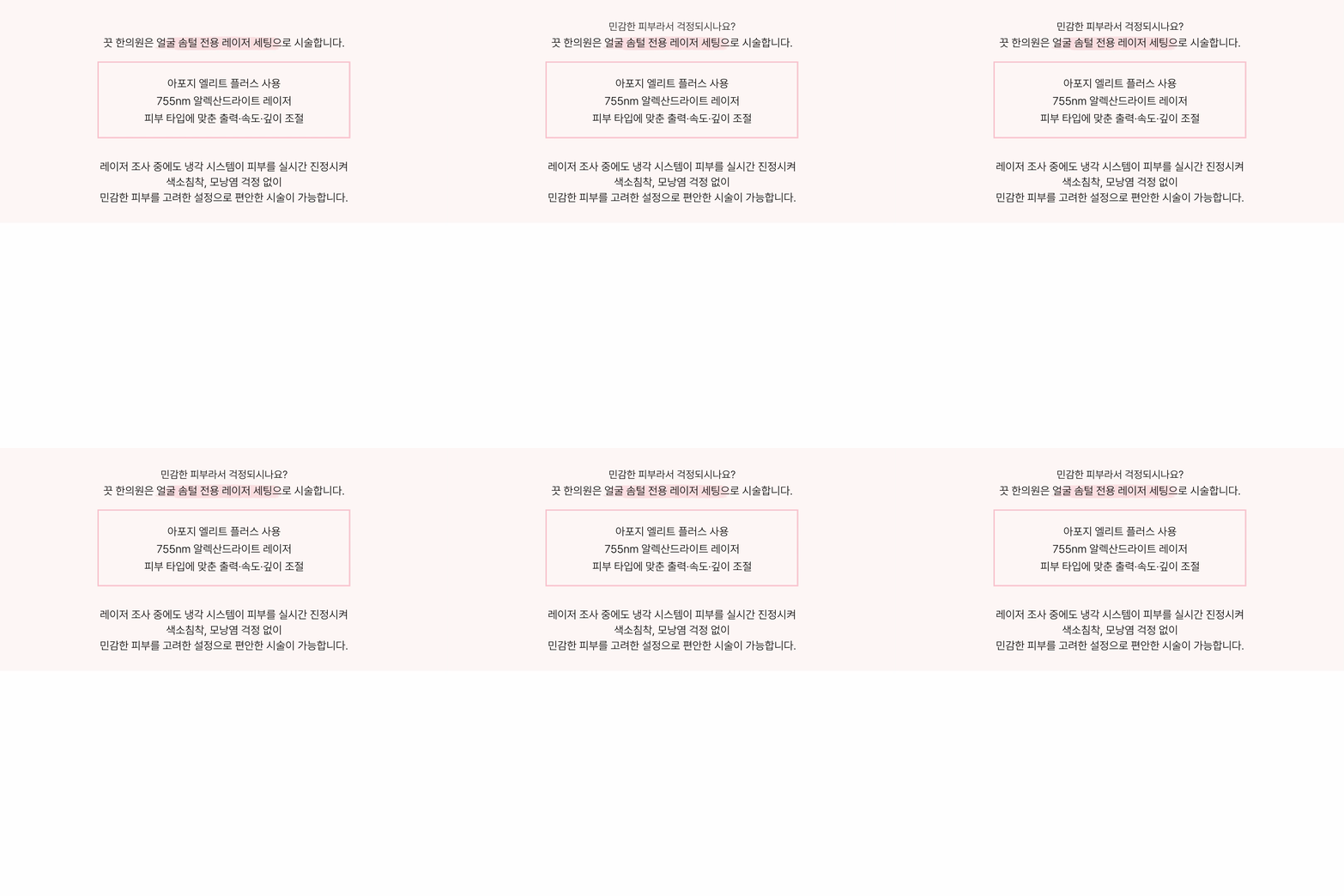
We use the Apogee Elite Plus device for hair removal.
This device uses a 755nm Alexandrite wavelength and finely adjusts its output to be suitable for fine hair removal on the face.
Its precisely controlled cooling system, along with adjustable spot speed and depth, helps enable a more stable procedure.
Laser settings are adjusted and applied to minimize discomfort during the procedure, even for those with sensitive skin.
5. Along with the immediate smoothness felt after the procedure, repeated sessions can lead to expected improvements in skin texture and tone.
Even with just one session, you can experience changes in the feel of your skin and its texture when applying makeup.
If you undergo consistent treatment for 5 or more sessions, you can observe changes in the light-reflecting properties of your skin's surface.
These changes can lead to skin that appears to have a subtle glow and a brighter look.
Afterward, maintenance treatments at intervals of 2-3 months are recommended.
This can help you consistently maintain a refined skin condition for a long time.
───────────────
Why is laser treatment recommended for fine hair removal?
Fine facial hairs are thin and contain less melanin, making them difficult to remove cleanly with shaving or waxing. Furthermore, these physical methods only act on the skin's surface, causing hair to grow back quickly, and continuous irritation can increase the likelihood of skin troubles or folliculitis.
Laser hair removal uses light energy of a specific wavelength to target the melanin pigment in hair follicles. The thermal energy generated at this time weakens the function of the hair follicle, inhibiting hair regrowth. Especially for removing fine hairs in sensitive areas like the face, short-wavelength lasers that reduce skin irritation, such as the Alexandrite laser, can be effectively utilized.
The Apogee Elite Plus device uses a 755nm Alexandrite wavelength, which has a high absorption rate for melanin pigment. This is an advantage, allowing for more effective hair removal results even on light and fine hairs.
The device's powerful cooling system helps reduce skin irritation during the procedure, and its design ensures that energy is precisely delivered only to the hair, which can lessen the burden of the treatment.
───────────────
Procedure Steps
- Anesthetic Cream Application (Optional): To minimize any discomfort during the procedure, an anesthetic cream may be applied, considering the patient's skin condition.
- Laser Irradiation: The laser is quickly applied to a broad area with an appropriate intensity, tailored to the individual's skin type and hair characteristics. The goal is to minimize unnecessary heat accumulation while efficiently managing fine hairs.
- Cooling and Soothing Care: Continuous cooling is applied to the skin throughout the procedure to aid in soothing, and care is taken to minimize external irritation.
───────────────
Recommended Treatment Cycle
Hair grows through three phases: anagen (growth), catagen (transition), and telogen (resting), and laser hair removal primarily works more effectively on hair in the anagen phase.
Therefore, we generally recommend 5 or more sessions at intervals of 3-4 weeks, and thereafter, maintenance treatments approximately once every 3 months can help sustain the improved skin condition.
Hair Removal Procedure Process
첫 상담부터 마무리까지의 실제 진행 순서를 확인하세요.
- 01
In-depth consultation on individual skin condition and treatment goals
- 02
Delicate 1:1 design application and treatment by the director medical staff
- 03
Application of regenerative cream to help soothe the skin in the treated area
시술 기본정보
시술 시간, 마취, 회복, 유지기간을 한 번에 확인하세요.
TIME
Within 10-20 minutes per area
ANESTHESIA
No anesthesia
RECOVERY
Immediate return to daily life
DURATION
Semi-permanent
Ideal For
One Fine Difference makes real results.
- KKEUT POINT 01
This may be suitable for those who wish to maintain a smooth and clean skin texture.
Q&A
고객님들이 가장 많이 물어보시는 내용을 모았습니다.
Can folliculitis occur after laser hair removal?

After laser hair removal, as heat is delivered to the skin, temporary inflammatory reactions like folliculitis can occur. Compared to other hair removal methods that directly stimulate hair follicles or damage the skin barrier, such as shaving or waxing, it's difficult to say that laser hair removal necessarily has a higher incidence of folliculitis. On the contrary, laser hair removal can help manage hair follicles hygienically and reduce long-term skin irritation, thereby lowering the possibility of folliculitis. After the procedure, it's important to take measures to help calm the skin, and if necessary, use antibiotic ointments to alleviate inflammatory reactions and protect the skin. Our clinic carefully checks the skin condition before and after the procedure and provides guidelines for preventing folliculitis.
How many sessions of hair removal treatment are generally recommended?
It varies depending on individual factors such as the treatment area, hair thickness, and density. Typically, 5 to 10 sessions may be recommended, and gradual improvement in skin texture can be expected through multiple treatments. Consistent management can lead to a more effective long-term hair removal solution.
What is an appropriate interval for hair removal treatment sessions?
Generally, it is recommended to receive the next session at an interval of 4 to 5 weeks after the previous treatment.
Can hair removal treatment and general skin care be performed on the same day?
Yes, procedures can be performed on the same day. Generally, you can receive toning treatments or other general skincare procedures first, followed by facial hair removal. After hair removal, it is helpful to pay special attention to moisturizing to prevent skin troubles.
Cautions
Results = Treatment × Aftercare. Please follow the notes below.
Please shave the hair in the planned treatment area on the day of or the day before your procedure.
Temporary redness, mild heat, or pain may appear in the treated area, but it usually subsides within 2-3 hours.
For about a week after the procedure, it is advisable to avoid activities that can irritate the skin, such as drinking alcohol, smoking, using saunas, or strenuous exercise.